
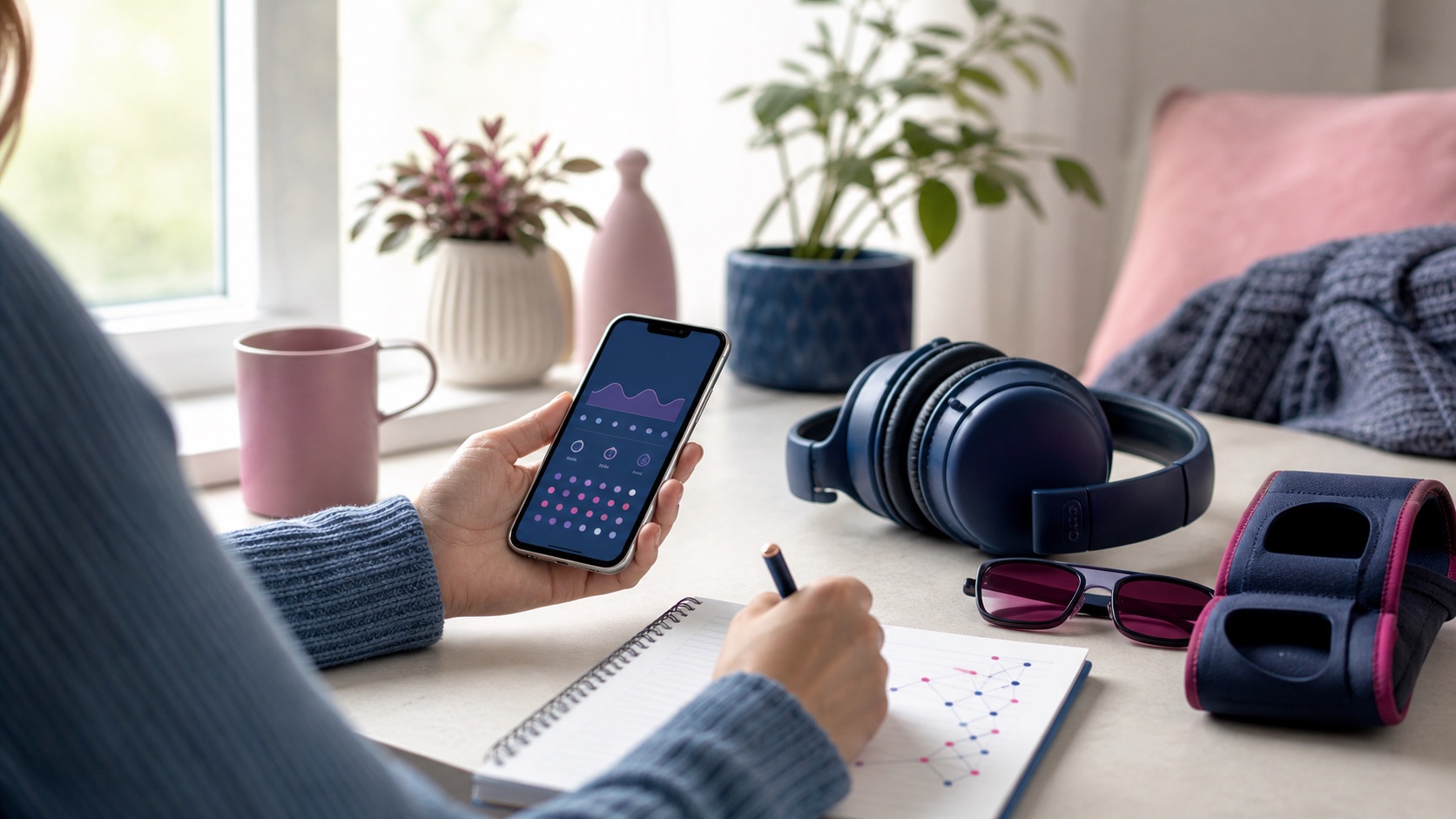
Quick answer: there is enough evidence and lived experience to take the overlap seriously, but not enough to claim a single cause. FND, sensory overload, autism, ADHD, hypermobility, hEDS and HSD may meet in the same person because they all affect load on the nervous system: sensory processing, attention, body awareness, pain, fatigue, balance, masking, recovery and the effort of staying upright in daily life.
If you spend time in FND support groups, one pattern becomes hard to miss. Someone talks about functional seizures, limb weakness, tremor, speech symptoms or shutdowns in busy places, and soon the conversation turns to autism, ADHD, hypermobility, Ehlers-Danlos syndrome, POTS, migraine, pain, fatigue or sensory overload.
For many people this cluster feels too specific to be coincidence. They may have seen a neurologist for FND, a rheumatologist or physiotherapist for hypermobility, an autism or ADHD assessor for neurodivergence, and a GP for pain, dizziness, fatigue or migraine - with each appointment looking at only one part of the picture.
This article is not saying, "autism causes FND" or "hypermobility causes FND". That would be too simple and not supported by the evidence. The better question is: what happens when one nervous system has to process a noisy world, a demanding body, variable symptoms and constant self-monitoring all at once?
Why this belongs in one article, not two
Sensory overload deserves its own attention, but it is also the thread that pulls the wider overlap together. For a person with FND, a supermarket is not just "busy". It may combine bright lighting, echoing sound, visual clutter, standing still, decision-making, pain, joint instability, balance work, social masking, heat, queues and the fear of having an episode in public.
That is why this is one article. Neurodivergence, hypermobility and sensory overload are not identical, but they can all reduce the margin between "I am coping" and "my system has tipped over". For some people with FND, that tipping point is when symptoms flare, a functional seizure happens, speech goes, walking changes, tremor increases, or the body forces a shutdown.
FND is real, and load matters
NHS Inform describes FND as a problem with how the brain receives and sends information to the rest of the body. It also explains that FND symptoms can include functional seizures, limb weakness, tremor, dystonia, gait problems, sensory symptoms, speech and swallowing symptoms, vision symptoms and cognitive symptoms.
A helpful way to think about the overlap is not "mind versus body". It is capacity. Every nervous system has a limit. Pain uses capacity. Poor sleep uses capacity. Bright lights and background noise use capacity. Masking uses capacity. Standing with unstable joints uses capacity. Fear of falling or being judged uses capacity. Trying to explain symptoms to people who do not understand uses capacity.
When capacity is low, a symptom that was manageable in the morning may become impossible by late afternoon. That does not make the symptom fake. It means the system is operating closer to its threshold.
Sensory overload in FND: why busy places can feel unsafe
Many people with FND describe symptoms that worsen in supermarkets, hospitals, schools, offices, public transport, shopping centres, concerts, restaurants or family gatherings. The common factor is not always emotional stress. Often it is sensory and cognitive load.
Sensory load can include:
- fluorescent lights, glare, flicker or moving visual patterns
- multiple voices, music, traffic, alarms or echoing spaces
- crowds, unpredictable movement and people standing close
- strong smells, heat, textures, clothing pressure or pain
- having to navigate, make decisions, answer questions and stay socially composed at the same time
Research on sensory processing in FND is still developing, but it supports what many patients report: some people with FND show patterns of sensory sensitivity, sensation avoiding or low registration. A later occupational therapy cohort also found elevated sensory processing scores in people with FND and reported improvement in a proportion of patients after sensory-informed OT intervention. This is not proof that sensory overload causes FND. It is evidence that sensory processing can be clinically relevant.
A practical way to say it in an appointment is: "My symptoms are more likely when sensory load is high. I would like help understanding whether sensory strategies, OT, pacing or environmental changes could reduce my risk."
Neurodivergence: autism, ADHD and the cost of processing the world
Autistic people can experience differences in sensory processing. ADHD can also bring differences in attention, regulation, task switching, impulsivity, sleep, emotional intensity and executive function. Many people are both autistic and ADHD, and many adults reach this understanding late, after years of forcing themselves through environments that were never designed for their nervous system.
If you are neurodivergent, daily life may involve invisible work:
- filtering background noise that other people barely notice
- controlling facial expression, tone, movement or stimming to appear "normal"
- planning transitions, remembering steps and managing time pressure
- recovering from social contact, sensory exposure or decision fatigue
- trying to describe internal body signals that are unclear, intense or difficult to name
The "too many tabs open" analogy is popular because it is simple. A neurodivergent person may already have several demanding background tasks running before FND symptoms even enter the room. Add pain, fatigue, dizziness, bright lights, a queue, a confusing appointment and the need to mask, and the system may freeze.
Research is beginning to catch up. A systematic review and meta-analysis found evidence of overlap between autism and FND, including a pooled autism comorbidity rate of around 10% in children presenting with functional seizures, while also warning that studies are limited and heterogeneous. The important clinical point is not to turn every person with FND into an autism or ADHD case. It is to ask whether neurodivergent needs are being missed in treatment, communication and rehabilitation.
Hypermobility: the hidden work of staying stable
Joint hypermobility means that some or all joints move beyond the usual range. NHS Inform notes that many people with hypermobile joints have no problems, but some have pain, stiffness, clicking joints, dislocations, fatigue, recurrent injuries, digestive symptoms, dizziness or fainting. When hypermobility causes symptoms, hEDS or HSD may be considered.
Hypermobility can add load in a very physical way. If ligaments and connective tissues are more lax, the body may rely more heavily on muscles, attention and proprioception to maintain position. Standing still, walking through a crowd or sitting upright can take more effort than it appears from the outside.
GeneReviews describes hEDS as involving joint hypermobility and instability, pain, soft tissue injury, chronic fatigue, autonomic dysfunction, migraine and other associated problems. That does not mean everyone with FND and hypermobility has hEDS. It does mean joint instability, pain, fatigue and autonomic symptoms can be part of the wider picture for some people.
Early research has also looked directly at this overlap. A preliminary study comparing people with FND, autistic people and non-clinical controls found higher self-reported hEDS/HSD-related symptoms in both the FND and autism groups than in controls. The sample was small, so it should not be treated as the final answer. But it does make the question legitimate.
A more useful model: total nervous system load
Instead of asking "which condition is the real one?", try asking "what is loading the system today?"
Total load can come from:
- Sensory load: lights, noise, movement, smell, touch, heat or visual clutter.
- Cognitive load: decisions, instructions, forms, appointments, memory, planning and time pressure.
- Social load: masking, explaining, being watched, being disbelieved or trying not to worry others.
- Physical load: pain, fatigue, unstable joints, balance, walking, posture, migraine, illness or poor sleep.
- Autonomic load: dizziness, faintness, temperature problems, palpitations, nausea or standing intolerance.
- FND load: the effort of managing warning signs, symptoms, safety planning and recovery.
This model is not a diagnosis. It is a way to make patterns visible. It also gives people practical routes forward. If the system is overloaded, the answer may not be "try harder". It may be reduce sensory input, support joints, improve pacing, treat migraine, plan transitions, change appointment format, reduce masking or allow more recovery.
What can help if this overlap fits your life
Management should be personalised, especially if you have functional seizures, falls, injuries, hEDS, POTS, migraine, autism, ADHD or other diagnoses. The ideas below are not treatment instructions. They are conversation starters for you, your GP, neurologist, occupational therapist, physiotherapist, psychologist, neurodiversity assessor or rehabilitation team.
Sensory pacing, not just physical pacing
Pacing is usually discussed as activity pacing, but sensory pacing matters too. A person may manage a short walk outside but crash after 20 minutes in a supermarket because the sensory and cognitive demand is completely different.
- Use quieter shopping times, smaller shops, online ordering or click-and-collect where possible.
- Try ear defenders, noise-reducing earplugs, sunglasses, tinted lenses or hats if they help.
- Plan exits before you enter busy spaces.
- Schedule recovery after appointments, travel, school runs, work meetings or social events.
- Use written notes and fewer verbal instructions when overloaded.
Support joints and reduce avoidable physical load
If hypermobility is part of your picture, joint support is not a failure. It may reduce the background effort your body spends staying stable.
- Ask for physiotherapy advice from someone who understands hypermobility and FND.
- Discuss braces, supports, footwear, mobility aids or pacing if pain and instability are affecting daily life.
- Avoid repeatedly demonstrating extreme joint range just to prove hypermobility.
- Track injuries, dislocations, subluxations, falls, dizziness and recovery time.
Reduce masking where it is safe to do so
Masking can be expensive. If you are autistic, ADHD or otherwise neurodivergent, pretending to be fine in every setting may leave fewer resources for movement, speech, balance, seizure control or recovery.
- Ask for written appointment summaries.
- Tell clinicians if eye contact, bright rooms, long waits or rapid questioning make symptoms worse.
- Use communication cards, notes or a supporter if speech can fail under load.
- Build decompression time before and after demanding interactions.
How to track the overlap without creating another exhausting job
The goal is not to document every sensation. The goal is to find repeated patterns that help decision-making. If tracking becomes a second illness, simplify it.
For each flare, functional seizure, shutdown or difficult day, try recording:
- where you were and what sensory load was present
- sleep, pain, migraine, illness, period or hormonal context if relevant
- standing time, walking time, joint instability, dizziness or injuries
- masking, social pressure, appointment stress or emotional load
- the FND symptoms that followed and how long recovery took
- what helped: quiet, darkness, lying down, food, hydration, support, medication if prescribed, or leaving the setting
SeizeControl can support this kind of pattern work for people tracking functional seizures and related context. Use it to bring clearer information into appointments: "These episodes cluster after high sensory load and poor sleep", or "These episodes are more likely when pain, dizziness and busy environments combine." That is more useful than trying to prove one single trigger.
Track patterns
Use SeizeControl to record load, episodes and recovery
Pattern tracking can help you move from "everything sets me off" to a clearer picture of sensory, physical, hormonal, sleep and recovery factors.
Open SeizeControl.ukHow to bring this up with a clinician
You do not need to arrive with a perfect theory. A careful, credible summary is better.
Try this appointment wording
"I have FND, and I am noticing a repeated pattern where symptoms worsen after high sensory load, pain, joint instability, poor sleep or masking. I am not saying this proves a cause, but I would like help reviewing whether neurodivergence, hypermobility, migraine, autonomic symptoms or sensory processing are relevant to my treatment plan."
Useful questions include:
- Could occupational therapy help with sensory strategies and daily function?
- Could physiotherapy review joint instability, balance, pacing and safe movement?
- Should I be assessed for autism, ADHD, hEDS, HSD, migraine, POTS or another condition?
- Are any symptoms new or different enough to need investigation rather than being assumed to be FND?
- How can my FND rehabilitation be adapted if I am neurodivergent or hypermobile?
When not to assume it is sensory overload or FND
This article is about patterns, not emergency diagnosis. People with FND can still develop new medical problems. Neurodivergent and hypermobile people can still have conditions that need urgent care.
Seek urgent medical help if symptoms are new, sudden, severe, unlike your usual pattern, linked to serious injury, include breathing difficulty or chest pain, involve a first seizure, or include a seizure pattern that is not normal for you. If you are unsure in the UK, use NHS 111 or emergency services based on the level of risk.
Why this validation matters
Many people with this overlap have been told they are "too complicated", "just anxious", "attention-seeking" or "collecting diagnoses". That can make people stop asking useful questions.
Validation does not mean claiming certainty where research is still catching up. It means saying: your pattern is worth taking seriously. Your body may be working harder than it looks. Your nervous system may have less spare capacity than other people assume. And the right support may need to account for sensory processing, neurodivergence, pain, joints, fatigue and safety - not just one label on one clinic letter.
Frequently asked questions
Can sensory overload trigger FND symptoms?
Some people with FND report that bright lights, noise, crowds, pain or other sensory experiences can trigger or amplify symptoms. Research supports that sensory processing difficulties are reported by some people with FND, but a trigger pattern should still be interpreted carefully with a clinician.
Is FND linked to autism or ADHD?
Research is still developing. Some studies report overlap between FND and autism, especially in functional seizures, and many people describe ADHD or autistic traits alongside FND. This does not mean autism or ADHD causes FND, but it may change sensory load, interoception, masking demands and treatment needs.
Is FND linked to hypermobility, hEDS or HSD?
Early research suggests people with FND may report more hypermobility spectrum symptoms than comparison groups. Hypermobility can also involve pain, fatigue, injury, proprioception and autonomic symptoms, all of which may increase overall nervous system load.
Should I ask about autism, ADHD or hypermobility if I have FND?
If the pattern fits your life, it can be reasonable to ask for assessment or advice. The aim is not to collect labels, but to identify practical supports: sensory adjustments, executive-function support, joint protection, pain management, pacing and safer rehabilitation.
How can I track sensory overload and FND flares?
Track the setting, sensory load, pain, sleep, activity, joint instability, emotional demand, masking, recovery time and the symptoms that followed. A short repeated pattern is usually more useful than a long diary that is too tiring to maintain.
Sources and further reading
- NHS Inform: Functional neurological disorder
- Autism Central: Sensory differences
- NHS Inform: Joint hypermobility
- Sensory Processing Difficulties in Functional Neurological Disorder
- Sensory Processing Difficulties and Occupational Therapy Outcomes for Functional Neurological Disorder
- Hypermobile spectrum disorder symptoms in FND and autism: preliminary study
- Comorbidity rates of autism spectrum disorder and functional neurological disorders
- GeneReviews: Hypermobile Ehlers-Danlos Syndrome
- SeizeControl by FND Connect