When people talk about Functional Neurological Disorder (FND), they usually focus on the person diagnosed.
The seizures. The tremors. The fatigue. The pain. The unpredictability.
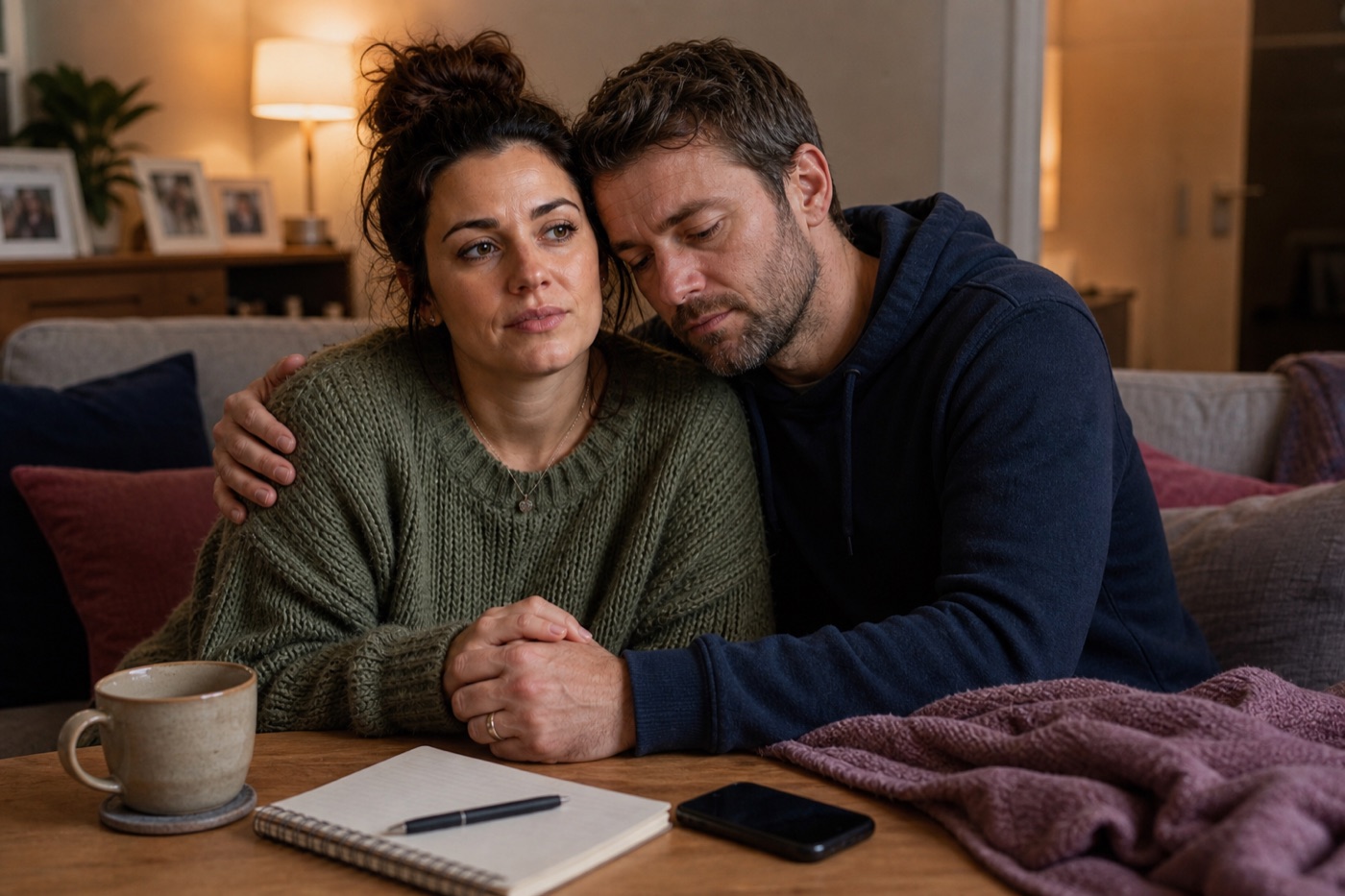
But there is another side to FND that often goes unseen: the partners, husbands, wives, girlfriends, boyfriends and families quietly trying to hold everything together while watching someone they love struggle every single day.
The truth is that FND does not just affect one person.
It affects relationships, homes, routines, finances, mental health, future plans, intimacy, communication and confidence. It changes life for everyone involved.
I Miss Us
One of the most common feelings partners describe is grief.
Not grief because the person is gone, but grief because life changed so suddenly. The spontaneous trips, date nights, shared responsibilities and future plans can all feel different overnight.
That feeling is incredibly hard to admit out loud. When someone you love is suffering, it can feel selfish to acknowledge your own pain too.
But your feelings matter.
You are allowed to feel exhausted.
You are allowed to feel overwhelmed.
You are allowed to miss the normal you used to have.
That does not make you unsupportive. It makes you human.
The Invisible Mental Load
Living alongside FND often means living in a constant state of uncertainty.
Will today be a good day? Will symptoms flare up? Will plans need cancelling again? Will fatigue hit halfway through the day?
Over time, partners can become hyper-alert without even realising it. You may start mentally planning escape routes, checking accessibility everywhere, watching for signs of exhaustion and preparing for symptom flare-ups before they happen.
For the person with FND, that unpredictability can create intense guilt. Many people feel like a burden when plans change or loved ones have to pick up more of the practical load.
Guilt and reassurance can quickly become an exhausting cycle for both people. At FND Connect, we think it helps to name the cycle gently, then look for practical ways to reduce pressure on both sides.
When Love Starts Feeling Like Caregiving
This is one of the hardest conversations couples affected by FND often face.
At some point, the relationship dynamic can quietly shift from partner and partner to carer and patient.
Caregiving comes from love, but it can still affect intimacy, equality and emotional connection. Suddenly conversations revolve around symptoms, appointments, mobility, medication, exhaustion and the repeated question: “Are you okay?”
Many couples describe feeling more like teammates surviving a crisis than romantic partners. That can be heartbreaking, and it is also common.
FND Connect’s view is that the care role needs to be acknowledged without allowing it to become the whole relationship.
Protect The Relationship, Not Just The Symptoms
There is no perfect formula, but couples who navigate chronic illness well often protect their relationship identity on purpose.
That means making room for moments that have nothing to do with FND.
- watching a film together
- sitting outside with coffee
- joking around
- cuddling without discussing symptoms
- sending a silly message
- talking about ordinary life
- celebrating tiny wins
Love cannot survive on survival mode forever. The relationship still needs connection.
Communication Has To Change
Stress changes people. Fatigue changes people. Pain changes people.
Sometimes the person with FND becomes withdrawn because they feel guilty. Sometimes the partner becomes frustrated because they feel helpless. Sometimes both people are silently struggling while trying not to upset the other.
That silence can slowly create distance.
Healthier communication often means saying the honest thing without turning it into an attack.
Instead of: “You never want to go out anymore.”
Try: “I miss spending time together and I’m struggling with the changes.”
Instead of: “You’re overdoing it again.”
Try: “I’m worried because I can see how exhausted you are.”
The goal is not blame. It is honesty with care.
Planning Life Around Unpredictability
This is one of the biggest relationship challenges with FND. Plans often change, sometimes at the last minute and sometimes repeatedly.
Over time, many couples learn to stop treating every plan as fixed. Instead, they build flexibility into normal life.
- having backup plans
- choosing low-pressure activities
- planning shorter outings
- allowing extra recovery time
- driving separately if needed
- agreeing beforehand that cancelling is okay
The goal stops being acting normal. The goal becomes creating a life that works for both people.
Our Living with FND guidance has more practical ways to think about pacing, flares and daily planning.
Partners Need Support Too
This part matters a lot.
Partners of people with FND often spend so much energy supporting someone else that they completely neglect themselves. But burnout helps nobody.
At FND Connect, we encourage partners and carers to protect their own wellbeing as part of the care plan, not as an afterthought.
Partners need rest, emotional support, hobbies, friendships, boundaries, space to breathe and someone they can talk to honestly.
Supporting someone should never mean disappearing yourself.
You Are Both Still In There
FND can change a relationship, but it does not automatically destroy one.
Many couples find that surviving chronic illness together can eventually create deeper honesty, empathy and emotional closeness. Not because it is easy, but because they learn how to become a real team: one built on patience, adaptation, understanding, humour, flexibility and compassion on the days when everything feels hard.
If you are the partner of someone living with FND, you matter too. Your feelings are valid too. You are not failing because this is difficult.
This disorder is difficult. But difficult does not mean hopeless.
Under the appointments, the exhaustion, the symptom flare-ups, the cancelled plans, the fear and the frustration, you are both still there.
Still loving each other.
Still trying.
Still learning.
Still adapting.
At FND Connect, we believe support should include everyone affected by FND, not just the person diagnosed. Nobody should have to navigate this alone.