
Quick answer: yes, heat can make FND symptoms worse for many people. SeizeControl's clinical-grade tracking evidence shows a direct correlation between environmental temperature and the frequency and intensity of functional seizures for many users. The practical lesson is clear: as heat rises, the threshold for nervous-system overwhelm can drop, so cooling, pacing, hydration and advance planning need to start before symptoms escalate.
With the forecast climbing this week, this is the right moment to put the plan in place rather than waiting for symptoms to prove the risk. Check the latest local forecast, choose the coolest times for essential activity, and treat rising temperature as a genuine threshold warning.
Why heat matters in FND
FND symptoms are often described as unpredictable, but unpredictable does not mean random. Many people can identify conditions where their nervous system is more likely to lose control: poor sleep, pain, infection, emotional stress, sensory overload, missed meals, travel, hormonal changes, recovery debt and heat.
Heat deserves special attention because it can affect several systems at once. It can increase fatigue, disturb sleep, reduce hydration, make standing or travelling harder, increase sensory discomfort, and make ordinary tasks cost more. For someone already living near their limit, that extra load can be enough to tip the nervous system into functional seizures, tics, tremor, weakness, speech symptoms, dissociation or a full flare.
Within SeizeControl, temperature is not being treated as a vague lifestyle note. It is one of the environmental factors that can be reviewed alongside episode timing, intensity and context. The pattern FND Connect sees is clinically important: for many people, higher environmental temperature is associated with a lower threshold for functional seizure activity and other overload symptoms.
What we mean by a lower threshold
When people say heat lowers their seizure threshold, they are usually describing a practical threshold: the point at which the nervous system can no longer maintain stable control. In FND, that does not mean every episode is the same as an epileptic seizure, and it does not mean heat is the only cause. It means heat can make the system easier to overwhelm.
A person may cope with a short shop on a cool day, but not the same shop on a hot day after poor sleep. A bus journey may be manageable in mild weather, but not when the bus is crowded, still, bright and overheated. A garden task may be fine for ten minutes in the morning, but not at 2pm in direct sun. The activity did not change much; the threshold did.
This is why the language matters. It is not weakness or lack of willpower. It is a load-management problem. Heat reduces available capacity, and symptoms can appear when demand exceeds that reduced capacity.
What SeizeControl is showing
SeizeControl was built to move beyond scattered notes. It allows episode timing, medication context, sleep, activity, weather and environmental factors to be reviewed against the same record. That matters because people with FND often know heat affects them, but they need a cleaner way to show the pattern.
FND Connect's SeizeControl evidence shows a direct correlation between higher environmental temperature and increased seizure frequency or intensity for many users. It also supports a broader lived-experience pattern: heat can reduce the nervous system's ability to stay in control, and once the threshold drops, seizures, tics, tremors and other functional symptoms can begin to take hold.
That does not mean every person with FND has the same heat response. Some people are more affected by cold, pressure changes, hormones, sleep, pain or sensory environments. The value of SeizeControl is that it helps make the pattern personal: what happens to your episodes as the temperature rises, how quickly do symptoms build, and what reduces risk?
Track the temperature pattern
Use SeizeControl before the next hot spell
Log episode timing, intensity, recovery, activity and weather context. The more consistent the record, the easier it is to see whether heat is reducing your threshold and what planning helps.
Open SeizeControl.ukDo not confuse FND overload with dangerous heat illness
Heat can lower the FND threshold, but heat can also cause medical illness. NHS guidance explains that heat exhaustion and heatstroke need prompt action, and that emergency help is needed for severe signs such as confusion, loss of consciousness, seizures, very high temperature or symptoms that do not improve after cooling.
This distinction matters. If a seizure or collapse happens in hot weather, do not automatically assume it is your usual FND pattern. If symptoms are new, different, severe, linked to injury, involve prolonged confusion, repeated vomiting, chest pain, breathing difficulty, fainting, a very high temperature or a first seizure, use urgent medical help.
For familiar FND symptoms in hot weather, the plan may be cooling, rest, hydration, reduced stimulation and your usual safety plan. For possible heatstroke or anything outside your usual pattern, it is a medical emergency.
Plan before the heat arrives
The best heat plan starts before the temperature peaks. Once symptoms are already escalating, decision-making is harder and the body has less spare capacity. Treat the forecast as an early warning system.
- Check the forecast daily: use the Met Office or your usual weather app and look at the warmest part of the day, not just the headline temperature.
- Move essential tasks: shop, travel, appointments, dog walking or chores should happen early morning or later evening where possible.
- Reduce the baseline: plan for a lower activity limit than normal. Heat exposure counts as activity load.
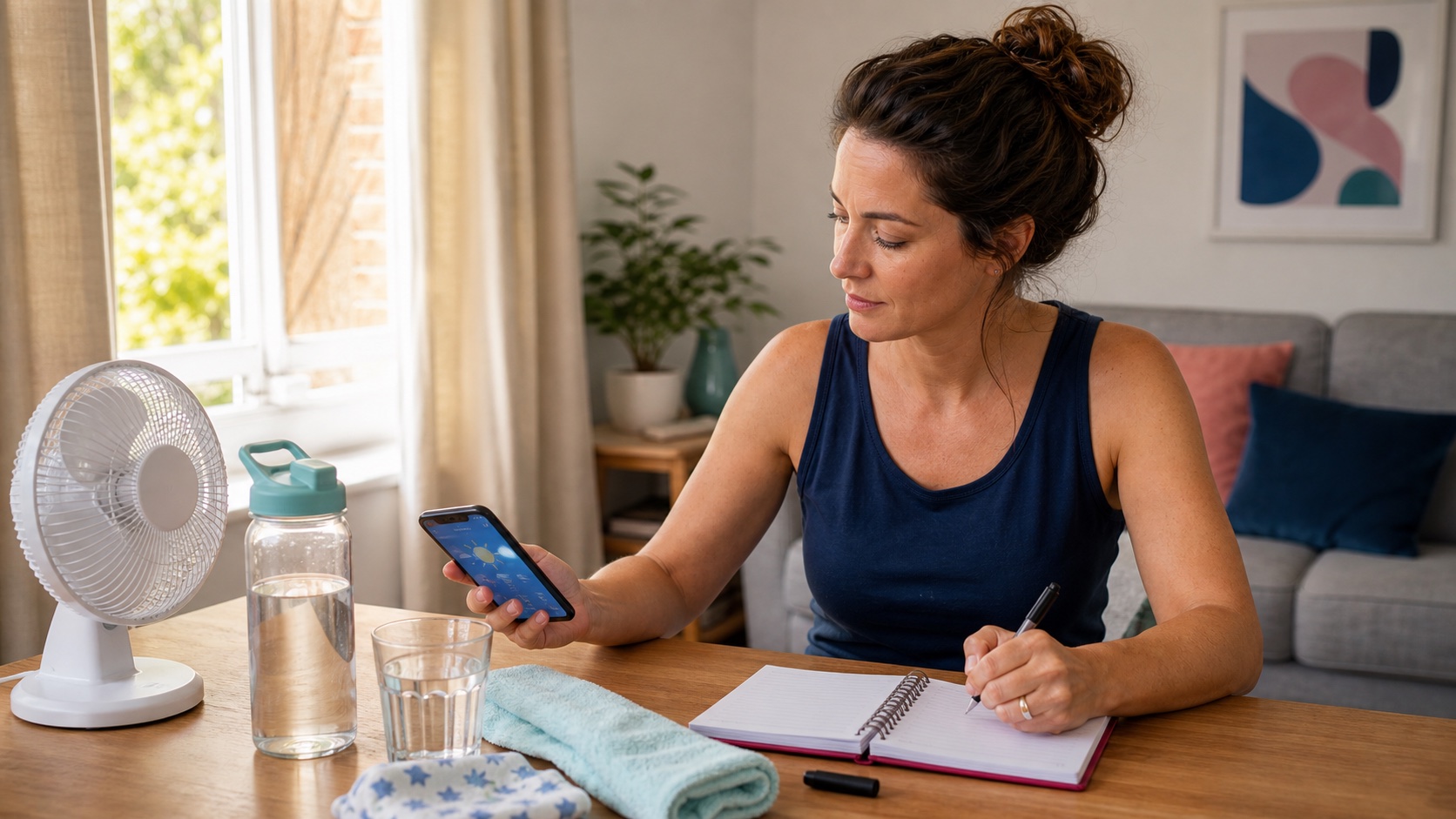
- Prepare cooling tools: water bottle, fan, cooling towel, loose clothing, curtains closed on sunny windows, cool packs wrapped in a cloth, shaded routes and rest stops.
- Plan support: tell someone if hot weather commonly triggers seizures, falls or dissociation. Agree what they should do and when to seek help.
- Protect sleep: heat-disrupted sleep can carry risk into the next day, so plan the following day more cautiously too.
Pacing in hot weather: lower the target
Pacing is not just doing less. It is choosing a level that can be repeated without pushing the nervous system into a crash. In hot weather, that level may be much lower than usual.
If your normal baseline is a 20-minute walk, a hot-day baseline might be five minutes in shade or no walk at all. If you normally cook a meal, a hot-day plan might be cold food, batch-prepared food, or someone else handling the hob. If you usually attend an appointment alone, hot weather may mean taking support, requesting a cooler waiting area or rearranging if it is not urgent.
The key is to act before symptoms prove the plan was too ambitious. In a heat-sensitive nervous system, waiting until tremor, tics, aura-like warning signs, dizziness, dissociation or seizure clusters have started may already be too late.
A hot-day pacing rule
Cut the plan before your body forces the cut. Choose the smallest useful version of the task, add cooling breaks, and stop while you still feel in control.
Practical ways to keep cool
UKHSA hot weather advice focuses on staying out of the heat where possible, keeping homes cooler, drinking enough fluids and checking on people who may be more vulnerable. For FND, these are not just general comfort tips. They are threshold-protection tools.
- Keep curtains or blinds closed on sun-facing windows during the hottest part of the day.
- Use a fan if it helps, but do not rely on a fan alone if the room is very hot and you feel unwell.
- Use cool showers, foot baths, damp cloths, cooling towels or wrapped cool packs.
- Wear loose, light clothing and avoid heavy layers or tight waistbands if they worsen sensory load.
- Drink regularly, especially if you are sweating, travelling, talking a lot, or using medication that affects fluid balance.
- Eat simple, regular meals or snacks so heat does not combine with missed food.
- Avoid queues, crowded transport, direct sun and long standing where possible.
- Keep medication stored as directed and check whether any medicines increase heat sensitivity or dehydration risk.
Work, school and caring responsibilities
Hot weather can turn an ordinary environment into an unsafe one. HSE guidance recognises heat stress as a workplace risk when the body struggles to control internal temperature. For someone with FND, that risk may include loss of functional control, seizures, tremor, falls, cognitive fog or delayed recovery.
Useful adjustments may include flexible start times, remote work, cooler rooms, fans or ventilation, extra breaks, avoiding outdoor duties at peak heat, reduced uniform layers, seated tasks, avoiding lone work after seizures, and permission to rearrange non-urgent meetings or travel.
For school, college or caring roles, the same principle applies: plan around the actual risk, not around what you can manage on a mild day. A written heat plan can reduce last-minute guilt and confusion.
When to seek urgent help
Use urgent medical help if symptoms are new, sudden, severe, unlike your usual pattern, or if there is any concern about heatstroke, injury or another medical cause. Seek emergency help for severe confusion, collapse, loss of consciousness, seizures that are not your usual pattern, a first seizure, breathing difficulty, chest pain, signs of stroke, or a very high temperature.
If you are not sure whether it is FND, heat exhaustion or something else, treat uncertainty as a reason to get advice. FND can coexist with other medical conditions, and hot weather can create real medical risk.
What to track during hot weather
Tracking is not about blaming yourself or proving you did everything perfectly. It is about turning a difficult week into information you can use next time.
- Temperature or weather context, including direct sun, humidity, travel and indoor heat.
- Episode time, duration, intensity and recovery time.
- Warning signs such as tremor, tics, speech change, dizziness, sensory overload, nausea or dissociation.
- Hydration, meals, sleep, pain, medication changes and infection symptoms.
- Activity load: walking, work, appointments, queues, childcare, housework, social events or screen time.
- What helped: cooling, rest, dark room, fluids, food, support, medication as prescribed, or leaving the environment.
After the hot spell, look for patterns. Did episodes cluster above a certain temperature? Did indoor heat matter more than outdoor temperature? Did symptoms peak the same day or after a poor night's sleep? Did early cooling reduce intensity? These are the questions that make a care-team discussion more useful.
Frequently asked questions
Can heat make FND symptoms worse?
Yes, for many people. SeizeControl clinical-grade observational evidence shows a direct correlation between higher environmental temperature and increased functional seizure frequency or intensity for many users. Heat can also add load through dehydration, poor sleep, fatigue and sensory stress.
Can hot weather trigger functional seizures?
Hot weather can lower the threshold for functional seizures in many people with FND. It is usually best understood as a threshold issue: heat may make the nervous system easier to overwhelm, especially when combined with tiredness, stress, pain, missed meals or dehydration.
Does this mean every seizure in hot weather is FND?
No. New, sudden, severe or different symptoms should not be assumed to be FND. Heat illness can become dangerous, and NHS advice says emergency help is needed for severe symptoms including seizures, confusion, loss of consciousness or very high temperature.
What should I do before a hot day if I have FND?
Check the forecast, plan the coolest parts of the day for essential activity, reduce non-essential jobs, prepare fluids, cooling aids and medication, tell someone your plan if you are at risk, and use SeizeControl or a diary to record temperature context and symptoms.
How can I pace myself in hot weather with FND?
Use a lower baseline than usual. Split tasks into shorter blocks, rest before symptoms escalate, avoid peak heat, build in recovery time, and treat heat exposure as part of your total nervous-system load rather than trying to push through.
What should I track in SeizeControl during hot weather?
Track episode timing, temperature or weather context, sleep, hydration, meals, activity, medication changes, recovery time, warning signs, injuries, support needed and whether the day involved travel, queues, crowds or direct sun.