
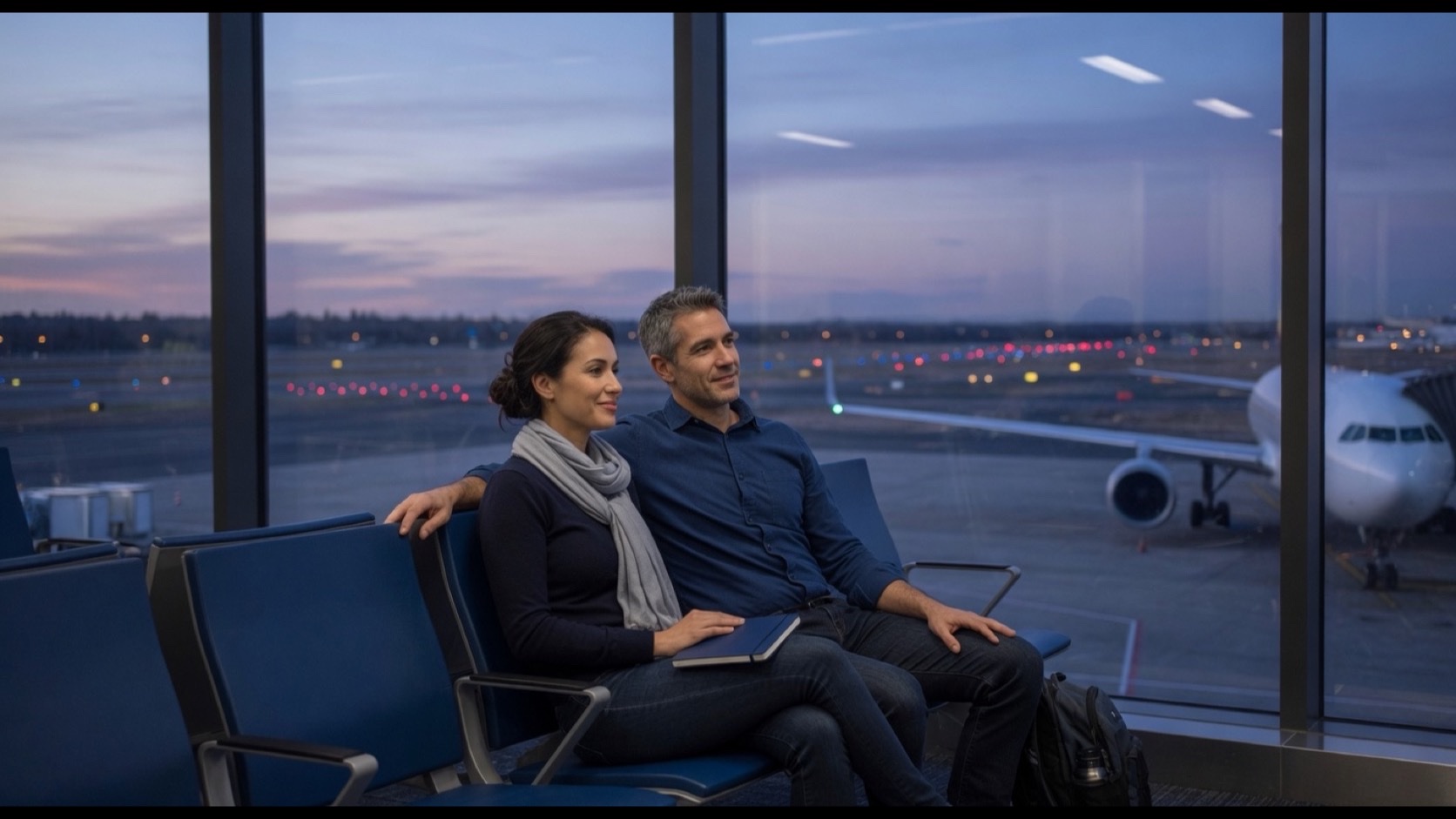
Quick answer: there is no single rule for everyone with FND. Some people fly without major difficulty; others avoid flying or only travel with heavy planning. Pressure changes, dehydration, fatigue, sleep debt, airport stress and disruption to routine can all lower your threshold. If you do fly, practical steps usually include telling the airline in advance, booking special assistance if helpful, pacing before and after the journey, hydration, grounding tools, and carrying a personalised cabin crew letter if episodes may alarm staff.
Important: this article is independent information for people living with FND in the UK. It is not medical advice, not an airline medical clearance decision, and not a substitute for your clinician, the airline's own policies, or emergency care if symptoms are new, severe or unlike your usual pattern.
Why there is no single yes or no
Functional Neurological Disorder is unusually variable. One person may have functional seizures only in high-stress settings. Another may have leg weakness, tremor, speech symptoms, dissociation, visual symptoms, disabling dizziness or sensory overload without seizures at all. Some people are stable for months; others live close to their symptom threshold every week.
That variability is why "can I fly with FND?" cannot be answered with one blanket rule. The better questions are:
- What happens to my nervous system in busy, noisy, bright, time-pressured environments?
- Do pressure or weather changes affect my symptoms?
- How much sleep, hydration and recovery buffer do I have before and after travel?
- Could an episode on board look alarming to strangers even if it is my usual FND pattern?
- Do I have a realistic plan for assistance, seating, medication, pacing and post-flight recovery?
NHS inform explains that FND symptoms vary from person to person and can include functional seizures, weakness, tremor, gait problems, sensory symptoms, cognitive symptoms, visual symptoms, dissociation and dizziness. Air travel stacks several of those risk factors together in a short window.
A clinician may be able to discuss fitness to fly in your specific case, especially if you have cardiac, respiratory, post-stroke, severe mobility, recent surgery, pregnancy complications or other conditions alongside FND. CAA passenger health guidance is aimed at helping people understand when to seek advice before flying.
What people report online and in peer communities
Formal research on FND and flying is limited, so lived experience matters. Across Reddit r/FND, HealthUnlocked threads about air pressure and travel, and the wider FND Hope community, the pattern is mixed rather than unanimous.
Common themes include:
- Some fly fine: especially on shorter routes, with preparation, familiar support, good sleep and stable symptoms.
- Some avoid flying: because one bad journey confirmed that airports and cabins are too unpredictable for their current threshold.
- Some only fly with heavy planning: extra recovery days, chosen seats, assistance booked early, medical letters, flexible tickets and a clear abort plan if symptoms build before boarding.
- Airport stress matters: security queues, time pressure, bright lights, announcements, crowds, masking and navigation can trigger symptoms before the aircraft door closes.
- Sensory overload is common: especially in busy terminals, boarding bridges, cabin lighting and post-landing rush.
- Functional seizures during boarding are reported: not by everyone, but often enough that people plan around the highest-risk window rather than assuming risk only happens mid-flight.
- Pressure sensitivity varies widely: some people link symptoms to storms, flights or altitude; others notice little connection.
Peer forums are not medical evidence, but they are useful for expectation-setting. They show that guilt, fear of being judged, and pressure to "prove" you can travel like everyone else are common emotional loads on top of the physical ones.
Pressure, cabin altitude, dehydration, fatigue and routine disruption
Commercial aircraft cabins are pressurised, but not to sea level. Cabin altitude is typically lower than cruising altitude yet still higher than ground level for much of the journey. For some people with FND, that change is irrelevant. For others, it is a genuine trigger.
People often describe barometric or atmospheric pressure sensitivity in the same breath as weather fronts, storms, long drives through hills, or migraine-like headache patterns. In SeizeControl tracking, atmospheric pressure shows up as an intense trigger for some users and a minimal one for others. That personal spread is exactly why a generic answer fails.
Even when pressure is not your main issue, flying still adds load:
- Dehydration: dry cabin air, less fluid intake, caffeine, alcohol or diuretic medicines can combine badly with fatigue and headache.
- Sleep debt: early flights, anxiety insomnia, time zones and poor rest the night before can lower threshold sharply.
- Fatigue: standing in queues, carrying bags, sensory processing and social masking all cost energy before wheels up.
- Routine disruption: meals, medication timing, pacing, quiet recovery time and familiar grounding tools are harder to maintain away from home.
- Immobility and pain: cramped seating can worsen pain, stiffness, dissociation or autonomic symptoms for some people.
If you are unsure whether pressure affects you, look back at symptom diaries around storms, weather changes or previous flights. If you use SeizeControl, review episode timing against atmospheric pressure and travel context rather than relying on memory alone after a difficult journey.
Track your travel pattern
Use SeizeControl before you book
Log episodes, pressure context, sleep, hydration, travel and recovery. A personal pattern is more useful than guessing whether flying will be manageable.
Open SeizeControlPractical preparation: assistance, pacing and grounding
Good travel planning starts before the airport. Treat the journey as a multi-stage load problem: getting there, airport processing, boarding, flight, landing, baggage and recovery.
Tell the airline and book assistance early
GOV.UK guidance on plane travel for disabled people explains that airlines and airports must help if you have a disability or mobility difficulty that makes it hard to use air travel. Assistance can include help at check-in, through security where appropriate, boarding, moving to the toilet, and support with baggage within rules.
Advance notice matters. The earlier you explain needs, the more realistic it is to arrange seating, boarding support or extra time. You can also share medical information the airline requests, especially if functional seizures, mobility limitations or medication storage are relevant.
Hidden disability support
Many UK airports recognise hidden disability support, including Sunflower lanyards or similar schemes. These can help signal non-visible needs such as sensory overload, anxiety, need for extra time or difficulty with instructions. They do not replace formal special assistance booking, but they can reduce friction on the day.
Pacing and recovery time
If you already use pacing for FND, air travel is a pacing stress test. Build rest before travel, not only after it. Many people plan a low-demand day before flying and at least one recovery day after arrival. If that feels excessive, compare it with the cost of a flare that lasts several days.
- Choose flight times that fit your sleep and medication routine where possible.
- Reduce non-essential tasks the day before departure.
- Pack food, fluids, headphones, sunglasses, fidget tools, comfort items and any prescribed emergency medicines as directed.
- Choose seating deliberately: aisle for toilet access, front for quicker boarding or exit, window if you need fewer people passing you, or extra legroom if budget allows.
- Hydrate steadily; do not wait until you feel dry.
- Use grounding tools that work for you: paced breathing, headphones, weighted item, familiar scent, written prompts, support person, or planned breaks.
- Agree a stop rule: if symptoms build in the terminal, it is valid to delay, rebook or not board.
External travel planning resources such as Healing Horizons: travelling with FND and their travel preparation checklist can help you build a written plan even though they are not UK-specific regulators.
Cabin crew anxiety, functional seizures and why a letter matters
One of the hardest parts of flying with FND is not only symptoms. It is being seen having them in public. Functional seizures and dissociative episodes can look dramatic. Movements, sounds, unresponsiveness, wandering, speech change or distress can alarm passengers and crew who assume epilepsy, intoxication, psychiatric crisis or fakery.
Functional seizures are real neurological events, but they are not always managed like a typical epileptic emergency. For many people, the priority is calm, time, reduced stimulation, safety from injury, reassurance and following an agreed personal plan. Calling for emergency help may still be appropriate if symptoms are new, prolonged, injurious, accompanied by breathing difficulty, chest pain, head injury, pregnancy concerns, or clearly unlike the person's usual pattern.
That is why a short, plain-English cabin crew letter helps. It should explain:
- your name and flight details if known;
- that you have Functional Neurological Disorder in simple language;
- how episodes may present for you;
- what crew should and should not do;
- whether you have functional seizures;
- whether a carer travels with you and what to do if they cannot help;
- an emergency contact if you want one included.
Ideally, discuss the letter with your clinician if you want it on clinic letterhead. The builder below is a practical draft for you to personalise and download as a PDF.
Build a personalised cabin crew letter
Fill in the fields below, update the preview, then download your PDF. Keep the tone factual and specific to you. This tool does not store your data.
UK rights, airline information and further travel guides
Beyond personal planning, know your rights. GOV.UK summarises rights of disabled passengers on transport, including air travel. CAA assisted travel guidance explains how to access help and what to expect at UK airports.
Useful links to keep together:
- SeizeControl on FND Connect for episode and pressure tracking
- CAA: health and medical information for air passengers
- NHS inform: Functional neurological disorder
- Healing Horizons: travelling with FND
- GOV.UK: Planes and airports for disabled people
Related guide
Need a pacing framework for travel weeks?
Long journeys often need the same load-management thinking as flare prevention at home.
Read the pacing guideWhen to reconsider flying or seek urgent help
It is reasonable not to fly if you are in a flare, sleep-deprived, dehydrated, recently had a new or worsening episode pattern, or do not have support and a safety plan you trust. It is also reasonable to postpone if airport stress alone has repeatedly triggered symptoms in rehearsal or previous trips.
Seek urgent medical help if symptoms are new, sudden, severe, unlike your usual FND pattern, or if there is any concern about another medical cause such as stroke, cardiac symptoms, severe breathlessness, head injury, pregnancy complications, or a first seizure. FND can coexist with other conditions.
Put pacing into practice
Plan the energy cost before the activity
SeizeControl's Energy Planner turns the existing risk forecast into six-hour energy windows, then helps you see what comfortably fits while protecting some capacity for later.
Open the Energy PlannerFrequently asked questions
Can I fly with FND?
Sometimes, but not always, and not with the same level of planning for everyone. The decision should be based on your current symptoms, pressure sensitivity, seizure risk, fatigue, airport stress, recovery time and whether you can notify the airline and carry a clear safety plan.
Does cabin pressure trigger FND symptoms?
It can for some people. Community reports and SeizeControl tracking show atmospheric pressure is a major trigger for some and barely relevant for others. Dehydration, sleep debt and routine disruption can add load even when pressure is not the main factor.
Should I tell the airline I have FND?
Usually yes if symptoms could affect the flight, boarding, seating, medication storage or assistance needs. Advance notice improves the chance of appropriate support and reduces last-minute stress on the day.
What should a cabin crew letter include?
Your name, optional flight details, a plain description of FND and your symptoms, what episodes may look like, what crew should do, functional seizure information if relevant, carer details if travelling with support, and an emergency contact if wanted. Use the builder on this page as a starting point.
Are functional seizures a medical emergency on a plane?
They are real and distressing, but they are not always the same as a typical epileptic emergency. A personalised letter helps crew respond calmly. Call for medical support if symptoms are new, prolonged, injurious, or clearly unlike your usual pattern.
Can I use special assistance at UK airports?
Yes. Disabled passengers and people with reduced mobility have rights to assistance when flying from UK airports, and airlines must help when notified in advance. Hidden disability schemes may also help signal non-visible needs.
Sources and further reading
- CAA: Health and medical information for air passengers
- CAA: Assisted travel
- GOV.UK: Planes and airports for disabled people
- GOV.UK: Rights of disabled passengers on transport
- NHS inform: Functional neurological disorder
- Healing Horizons: Travelling with FND
- Healing Horizons: Travel preparation checklist for FND
- FND Hope UK
- FND Connect: SeizeControl
- FND Connect: Pacing guide