
Quick answer: Functional seizures (also called dissociative seizures or non-epileptic seizures) are real, involuntary neurological events. They arise from a problem with brain function and signalling rather than the electrical storms seen in epilepsy. They are not chosen, faked or "just panic". Accurate diagnosis, safety planning, understanding your own patterns and specialist support can make a real difference.
One of the hardest parts of FND for many people is the seizures that look exactly like epilepsy but are not caused by epilepsy.
You collapse, shake, go blank, thrash or lie unresponsive. Paramedics are called. You may be given emergency medication you do not need. You wake up exhausted, bruised, incontinent or unable to speak. Then someone says "the EEG was normal" or "it is functional" and the room changes.
The fear, the shame, the repeated explanations and the worry that the next one will happen in public or at work are exhausting. This post is a practical, UK-focused guide to what functional seizures actually are, how to keep yourself or someone else safe, what recovery often involves and how to talk about them without the old, damaging language.
Why the epilepsy mix-up is so common
Functional seizures are one of the most frequent reasons people are brought to hospital with suspected epilepsy. In some studies, around 1 in 10 people assessed for seizures in hospital turn out to have functional rather than epileptic events. Many are initially diagnosed with epilepsy and started on anti-seizure medication (ASM) that will not help and may cause side effects.
The events can look extremely similar: loss of awareness, shaking, stiffening, falling, staring. Even experienced clinicians can struggle without video or specialist assessment. That is why so many people live for months or years on the wrong label.
Having FND does not protect you from also having epilepsy. Some people have both. New, different or first-time events always need proper medical assessment.
What functional seizures actually are
Like other FND symptoms, functional seizures are a problem with the software of the nervous system rather than hardware damage visible on routine scans. The brain's usual control of movement, awareness and response becomes temporarily disrupted through mechanisms that include dissociation, altered attention and expectation, and learned patterns in the nervous system.
They are involuntary. The person is not choosing the event, performing or "putting it on". The old term "pseudoseizures" was actively harmful and is no longer used by informed clinicians for exactly this reason.
Many people experience a warning phase: rising dissociation (feeling spaced out, unreal, detached from the body), hyperventilation, tingling, a sense of panic or "about to go", or escalating physical symptoms. Learning to recognise and work with that window can be part of longer-term management for some people.
Features that can point toward functional seizures
No single feature is diagnostic on its own. Diagnosis should be made by a specialist using history, examination and ideally video (phone footage is very helpful) or video-EEG. Features that are more common in functional seizures include:
- Longer duration (often several minutes, sometimes much longer; epileptic tonic-clonic seizures are usually 1-3 minutes).
- Fluctuating or stop-start movements rather than sustained rhythm.
- Eyes closed tightly or resistance to eye opening (in epileptic seizures eyes are often open or eyes roll up).
- Side-to-side head or body movements, pelvic thrusting, or arching of the back.
- Crying, screaming or emotional vocalisation during the event.
- Ability to recall some or all of what was said around them in some cases.
- Gradual onset or offset; events that happen when resting rather than during activity.
Afterwards there may still be a significant "hangover": exhaustion, headache, weakness, brain fog, emotional crash or pain that can last hours or days. This is real and needs planning for (see the symptom hangover guide).
Practical tip: filming events
If it is safe, ask someone nearby to film a typical event on their phone (start before or as soon as possible, keep the whole body in frame if you can, note the time). Show the video to your GP or neurologist. Specialists can often diagnose functional seizures with high confidence from good video alone. This also helps rule out or identify co-existing epilepsy.
Safety during an event
First aid for functional seizures is broadly similar to epileptic seizures, with important differences:
- Protect from injury: cushion the head, move hard or sharp objects away, loosen tight clothing around the neck if easy.
- Do not restrain or hold the person down. Do not put anything in the mouth.
- Time the event. Note when it started and what you observe.
- Stay calm and reassuring. Talk quietly if the person seems aware at any point. Many people can hear during parts of the event.
- Recovery position if they are on the floor and it is safe to move them, especially if there is risk of vomiting or they are deeply unresponsive.
- Do not give emergency epilepsy medication (e.g. buccal midazolam or rectal diazepam) unless the person has a known diagnosis of epilepsy with a specific protocol that includes functional events. Giving it when not indicated can cause harm.
Call 999 if:
- This is a first suspected seizure for the person.
- The event lasts a long time (e.g. >5-10 minutes of continuous shaking or unresponsiveness, or different from their usual pattern).
- There is injury, breathing difficulty, choking, or the person does not start to recover as expected.
- You are unsure whether this could be epileptic status or something else serious.
- The person has known co-existing epilepsy and this event is different or prolonged.
After the event, check for injury, offer water, a quiet space, and support to get home or rest. Many people need significant recovery time afterwards.
The aftermath and recovery debt
Functional seizures often carry a heavy tail. People describe post-event fatigue that feels like being hit by a truck, increased other FND symptoms (weakness, tremor, speech loss, pain, brain fog), headaches, emotional lability and needing days to get back to baseline. This is not "just tiredness". It is part of the nervous system's response and needs the same respect as any other flare.
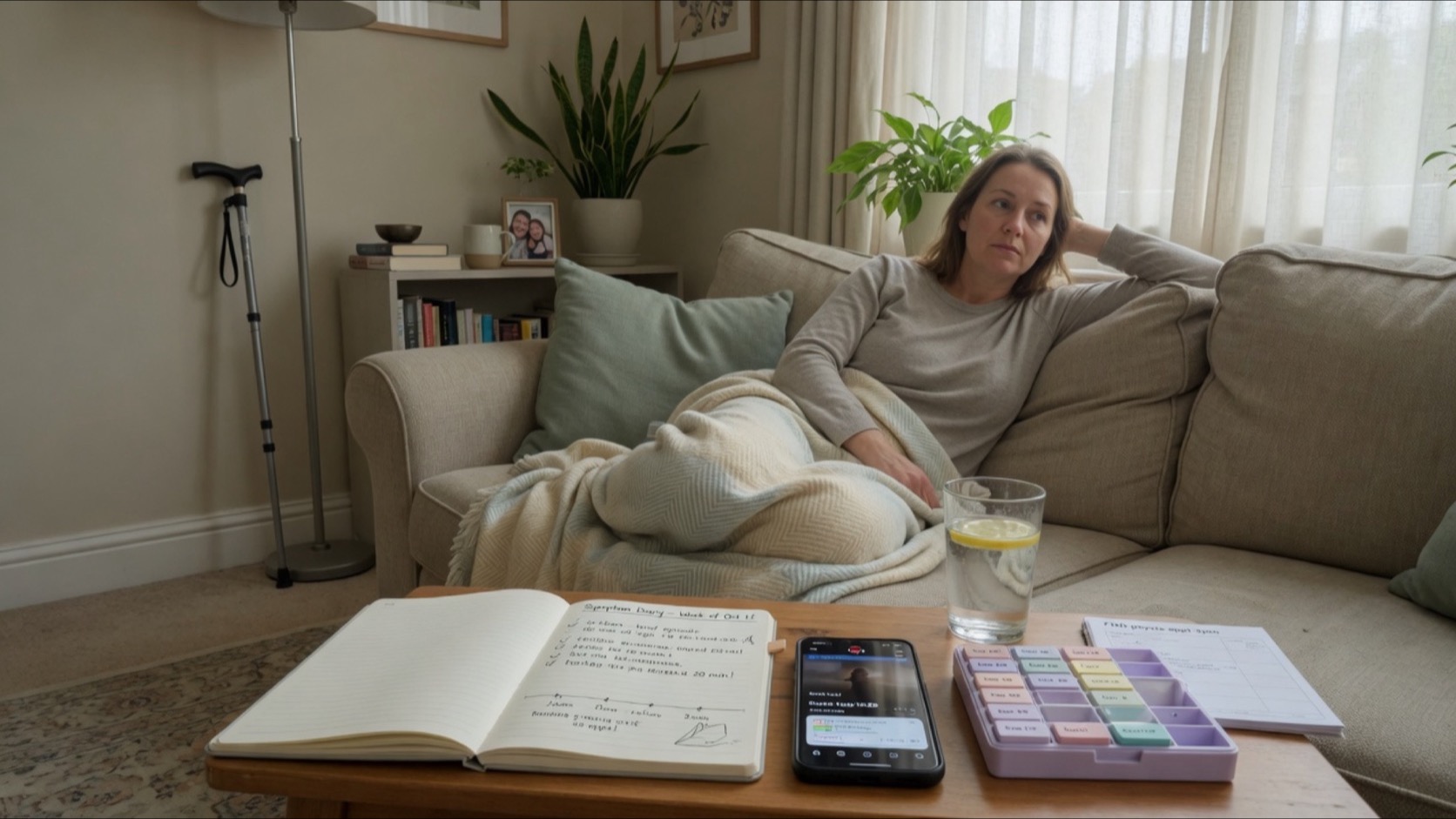
Plan for it: have a post-seizure protocol (who to call, rest plan, work/school adjustments, pain relief if used, hydration, dim lights, no big decisions). Track patterns if you can – time of day, preceding triggers, menstrual cycle if relevant, sleep, sensory load – using tools like SeizeControl or a simple diary. Patterns can inform pacing and warning recognition even if they never become perfect predictors.
Reducing fear and the vicious cycle
Fear of the next seizure is completely understandable and itself can become part of the load that makes events more likely for some people. A common cycle is: worry about seizures → more hypervigilance and physiological arousal → events become more frequent or frightening → more worry.
Helpful steps for many (worked on with a clinician where possible):
- Get a clear, confident explanation of the diagnosis from someone who understands FND. "This is real, this is FND, this is how we know, and here is what we can do" changes the story.
- Learn your personal early warning signs and what (if anything) interrupts or softens the escalation for you. This is highly individual.
- Safety planning reduces background terror: who knows what to do, where is safe to be, what you carry (alert card, emergency contacts, seizure description).
- Pacing the things that lower your threshold (poor sleep, heat, sensory overload, boom-and-bust activity, pain flares) can reduce frequency for some people.
- Specialist psychological input for functional seizures (often CBT-informed or other approaches developed for dissociative seizures) has evidence and is very different from generic "just relax" advice.
Progress is rarely linear. Good periods do not mean you caused the bad ones. Setbacks do not mean you have failed.
Explaining to others (family, work, paramedics, public)
Simple, factual language helps:
- "I have functional seizures as part of FND. They look like epileptic seizures but are caused by a problem with how my nervous system is functioning, not epilepsy. The treatment is different."
- "Please keep me safe, time it, and do not give me epilepsy emergency medication unless my care plan says otherwise."
- "Afterwards I will be very tired and may need help getting somewhere quiet to recover. This is normal for me."
For work or school: link to the reasonable adjustments and PIP posts. A letter from your clinician explaining functional seizures, recovery needs and safety can be useful. Some people carry a short laminated seizure response card.
For driving: functional seizures count for DVLA purposes. You must stop driving and notify the DVLA. See the driving with FND guide for details.
When to get symptoms checked again
Even with a solid FND diagnosis, new, sudden, severe, different or prolonged events need medical review. You can have FND and still develop epilepsy, migraine, cardiac issues, infection or injury-related problems. "It is just my FND" should never be the automatic response to something that feels wrong or dangerous. Use the flare or emergency guide and your own care team plan.
What has helped you?
Functional seizures are frightening and isolating for many. If this post names something you live with, consider sharing one practical thing that has helped you or your supporters (a phrase, a safety routine, a way of explaining, a pacing change). It can reduce the aloneness for someone else.
Put pacing into practice
Plan the energy cost before the activity
SeizeControl's Energy Planner turns the existing risk forecast into six-hour energy windows, then helps you see what comfortably fits while protecting some capacity for later.
Open the Energy PlannerFrequently asked questions
Are functional seizures real?
Yes. Functional seizures are genuine neurological events caused by a temporary problem with how the nervous system is functioning, not by structural damage, choice or imagination. They are as real and often as disabling as epileptic seizures.
How can I tell if a seizure is functional or epileptic?
Only a specialist can diagnose with confidence, ideally using video of the event or video-EEG. Some features more common in functional seizures include longer duration, fluctuating movements, eyes closed tightly, side-to-side head movements, and retained awareness or recall in some cases. Never rely on self-diagnosis. Record events safely if possible and show them to your care team.
What should I do during a functional seizure?
Focus on safety: protect the head, clear the area, time the event, stay calm and do not restrain the person or put anything in their mouth. Most first aid steps are similar to epileptic seizures. Do not give emergency epilepsy medication unless the person is known to have co-existing epilepsy and a specific protocol. Call 999 for first events, injury, breathing difficulty, prolonged events or if you are unsure.
Do anti-epileptic drugs help functional seizures?
No. There is no evidence that epilepsy medicines treat functional seizures and they can cause side effects. If you were prescribed them due to misdiagnosis, your specialist can help you taper safely. Treatment focuses on education about the diagnosis, therapy approaches that address the functional mechanism, and managing triggers and recovery.
Can I have both epilepsy and functional seizures?
Yes, it is possible and occurs in a significant minority of people. This is why accurate diagnosis matters and why new or different events should always be assessed. Video-EEG can help clarify mixed pictures.
What helps reduce functional seizures over time?
Many people benefit from understanding the diagnosis clearly (this itself reduces fear and frequency for some), identifying personal warning signs or triggers (fatigue, sensory load, pain, hyperventilation, stress, rest states), pacing, grounding or breathing techniques during warnings, and specialist therapies such as CBT-informed approaches for dissociative seizures. Treating co-occurring issues like sleep, pain or anxiety can also help. Progress is often gradual and non-linear.
Sources and further reading
- Neurosymptoms: Functional (Dissociative) Seizures – Jon Stone et al.
- Epilepsy Action: Functional (dissociative) seizures
- FND Action: Functional Seizures
- NINDS: Functional Neurologic Disorder
- FND Hope: Functional Seizures
- Incidence and prevalence of functional neurological disorder (Finkelstein et al., JNNP 2025)
- FND Connect: FND Flare or Medical Emergency?
- FND Connect: The FND Symptom Hangover
- FND Connect: Can You Drive With FND?
- SeizeControl – FND seizure and symptom tracking