Quick answer: looking better with FND does not always mean being better. Symptoms can fluctuate, people can mask what is happening, and the cost of one activity may arrive later as fatigue, pain, brain fog, movement symptoms, sensory overload or functional seizures.
One of the most frustrating things about FND is that other people often judge it by snapshots. They see someone at a family meal, in a work meeting, smiling in a photo or walking more steadily for a few minutes. Then they assume the illness has lifted.
But a good day with Functional Neurological Disorder is not always a symptom-free day. Sometimes it is a day built out of rest, timing, medication, mobility aids, careful choices, adrenaline, a quiet environment and a plan for what will be cancelled afterwards.
This is the good-day problem: the better someone looks, the harder it can be for others to understand how much effort it took to get there.
1. A good day may mean "possible", not "easy"
For some people with FND, a good day means they can speak more clearly, walk further, sit in a brighter room, leave the house, socialise for an hour, cook a meal or concentrate long enough to reply to messages. That can be real progress. It can also still be fragile.
The mistake is assuming that because something was possible once, it is now possible whenever someone else expects it. FND symptoms can change with sleep, pain, illness, sensory load, exertion, stress, heat, hormones, medication changes and recovery time. Capacity is not fixed.
That is why "you did it yesterday" is not always fair. Yesterday may have used tomorrow's energy.
2. FND symptoms can fluctuate without being fake
NHS Inform describes FND as a condition where the brain and body have difficulty sending and receiving signals. NINDS describes Functional Neurologic Disorder as neurological symptoms linked to changes in how brain networks function. In plain English: the symptoms are real, but they can be affected by how the nervous system is functioning in that moment.
That can make FND confusing from the outside. A tremor may settle in one situation and worsen in another. Speech may be easier at home than in a busy clinic. Walking may change when someone is tired, watched, rushed, overheated or recovering from a previous flare. Functional seizures may cluster after a period of overload rather than during the original activity.
Fluctuation is not proof of pretending. Many real health conditions fluctuate. Migraine, asthma, pain conditions, epilepsy, autoimmune conditions and fatigue-related illnesses can all have better and worse days. FND is no different in that basic respect: the visible picture changes.
3. Looking well can hide a lot of work
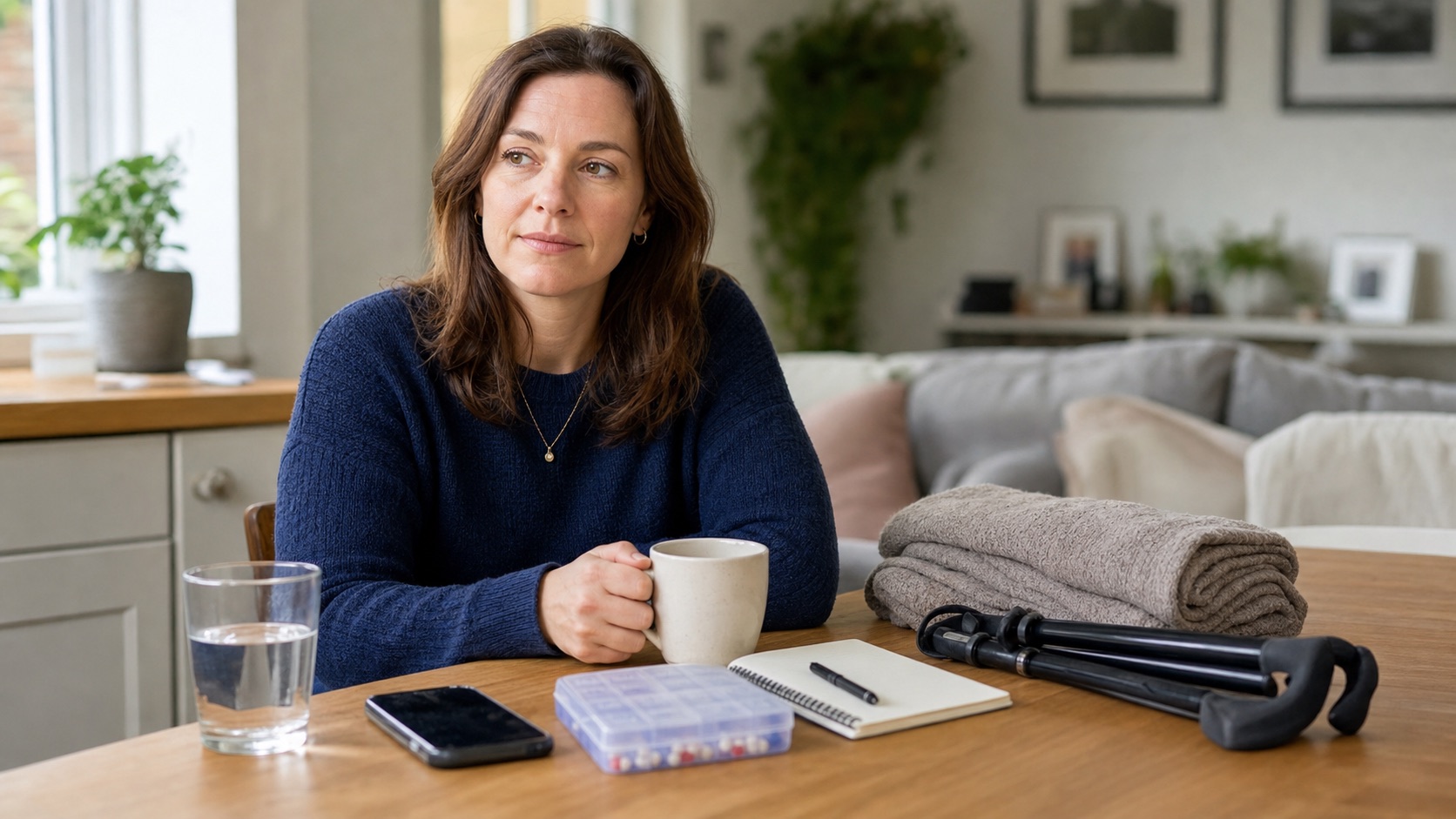
When someone with FND turns up on a good day, you may not see what happened before they arrived. You may not see the cancelled plans, the rest day, the careful route, the mobility aid in the car, the quiet exit plan, the symptom tracker, the medication organiser, the ear defenders, the water bottle, the pacing reminders or the decision to do less tomorrow.
You may also not see masking. Some people become very skilled at appearing calm, capable or cheerful because they do not want to worry others, be judged, lose work opportunities or have every social moment become a medical conversation.
Masking can make life easier in the moment. It can also make symptoms easier for other people to dismiss.
4. The cost may arrive later
With FND, the price of activity is not always paid during the activity. It may arrive hours later or the next day. Someone might manage a birthday meal and then spend two days with heavier legs, worse tremor, brain fog, pain, sensory sensitivity, fatigue or more episodes.
That delayed cost is one reason comments like "you looked fine" can hurt. The person may have looked fine at the exact moment you saw them. That does not tell you what it took to get there, how long they could sustain it, or what happened afterwards.
If you are trying to understand someone's capacity, ask about the full pattern: preparation, activity, recovery and what gets lost afterwards.
5. What to say instead
Good days should be allowed to exist. People with FND deserve moments of normality, confidence, fun, work, movement and connection without those moments being used as evidence against them later.
Less helpful
- "You looked fine yesterday."
- "So are you better now?"
- "If you can do that, why can't you do this?"
- "Maybe you just need to push yourself more."
- "I saw your photo, so it cannot be that bad."
More helpful
- "I'm glad you had a better day. How are you today?"
- "Did that take a lot out of you afterwards?"
- "What made yesterday manageable?"
- "Do you need recovery time after this?"
- "What should we change so this is easier next time?"
6. How supporters can make good days safer
The goal is not to make someone afraid of good days. The goal is to stop turning good days into a trap. If a person feels that every visible improvement will be used to remove support, question their symptoms or raise expectations, they may hide progress or avoid meaningful activity altogether.
Supporters can help by noticing what made the day possible. Was the room quieter? Was there a chair nearby? Did they have transport? Could they leave early? Was there less pressure to speak, stand, explain or perform? Those details matter because they can be repeated.
Employers, schools and families can also avoid all-or-nothing thinking. A person may be able to do one meeting but not a full day. One social event but not the weekly shop afterwards. One walk with rests but not stairs, crowds and bright lights on the same day. Good support makes room for partial capacity.
7. Do not assume every new symptom is FND
There is one important safety point. If symptoms are new, sudden, severe, injury-related or very different from the person's usual FND pattern, do not assume it is "just FND". Use urgent medical advice when needed.
Knowing someone's usual pattern can help supporters respond calmly. It should not stop anyone taking new or worrying symptoms seriously.
The takeaway
A good FND day is still worth celebrating. It can mean something is working: pacing, treatment, rest, support, environment, confidence or luck. But it should not be used as a test someone must pass forever.
Looking better is a moment. Being better is a pattern. For many people with FND, that pattern includes progress, setbacks, recovery time, invisible work and days that cost more than they appear to.
If this article explains something you have found hard to say, share it with the person who needs to understand the difference.
Frequently asked questions
Can FND symptoms really be better one day and worse the next?
Yes. Functional Neurological Disorder symptoms can fluctuate. Sleep, pain, exertion, sensory load, illness, stress, heat, medication changes and recovery time can all affect how much capacity someone has on a given day.
Does looking well mean someone with FND is better?
Not necessarily. Someone may look well because they planned carefully, rested beforehand, used aids, masked symptoms, chose a manageable environment or paid for the activity afterwards with a delayed flare.
Why can one activity cause symptoms later?
The cost of activity is not always immediate. Some people with FND experience a delayed increase in fatigue, pain, movement symptoms, brain fog, sensory overload or functional seizures after doing more than their nervous system can recover from.
Are good days proof that FND is psychological?
No. Many real medical and neurological symptoms fluctuate. A good day does not prove symptoms are voluntary, and a trigger does not mean someone is causing their symptoms on purpose.
How should family, friends or employers respond to a good day?
Avoid treating one good day as proof that support is no longer needed. Ask what made the day possible, what recovery time may be needed, and whether the same activity would still be manageable tomorrow.
When should someone with FND seek urgent medical help?
Seek urgent medical help for symptoms that are new, sudden, severe, injury-related, or very different from the person's usual FND pattern. Do not assume every new symptom is FND.