Quick answer: improvement and recovery are possible with FND, but outcomes vary. Hope is helpful when it creates options; it becomes pressure when persistent symptoms are treated as evidence that someone has not accepted the diagnosis, tried hard enough or stayed positive enough.
Introduction
"You can recover."
For someone newly diagnosed with FND, those words can feel like a light switching on. They can challenge the idea that nothing can change and create a reason to engage with rehabilitation, learn about symptoms and imagine a future that is bigger than the current crisis.
But the same words can land very differently after months or years of symptoms, inaccessible services, treatment waiting lists, repeated setbacks or enormous effort that has not produced the promised result.
Then, "you can recover" can start sounding like: so why haven't you?
Recovery Is Possible. It Is Not a Promise.
FND is treatable, and some people improve substantially or recover. Specialist rehabilitation may include physiotherapy, occupational therapy, psychological therapy, speech and language therapy, education and treatment of other health problems. Earlier, knowledgeable care can help.
But FND is not one symptom with one pathway. People have different symptom combinations, durations, coexisting conditions, environments, support and access to treatment. Research and clinical guidance describe variable outcomes, not a guaranteed result.
Honest hope sounds like: "Improvement is possible, and we will work with you to find what helps." It does not sound like: "If you believe hard enough, you will get better."
When Hope Quietly Becomes Blame
Recovery language becomes harmful when every setback is interpreted as resistance, fear, poor motivation or failure to accept the diagnosis.
People may hear:
- "You need to accept it." Even when they do accept the diagnosis and are asking for practical treatment.
- "Try not to focus on symptoms." Even when symptoms affect safety, mobility or communication.
- "You have to want recovery." As though anyone would choose seizures, weakness, pain or lost independence.
- "Your mindset is holding you back." When the bigger barrier may be inaccessible or unsuitable care.
These messages can make someone feel that illness is their fault twice: first for developing symptoms, and then for failing to make them disappear.
The Invisible Work Behind "Trying"
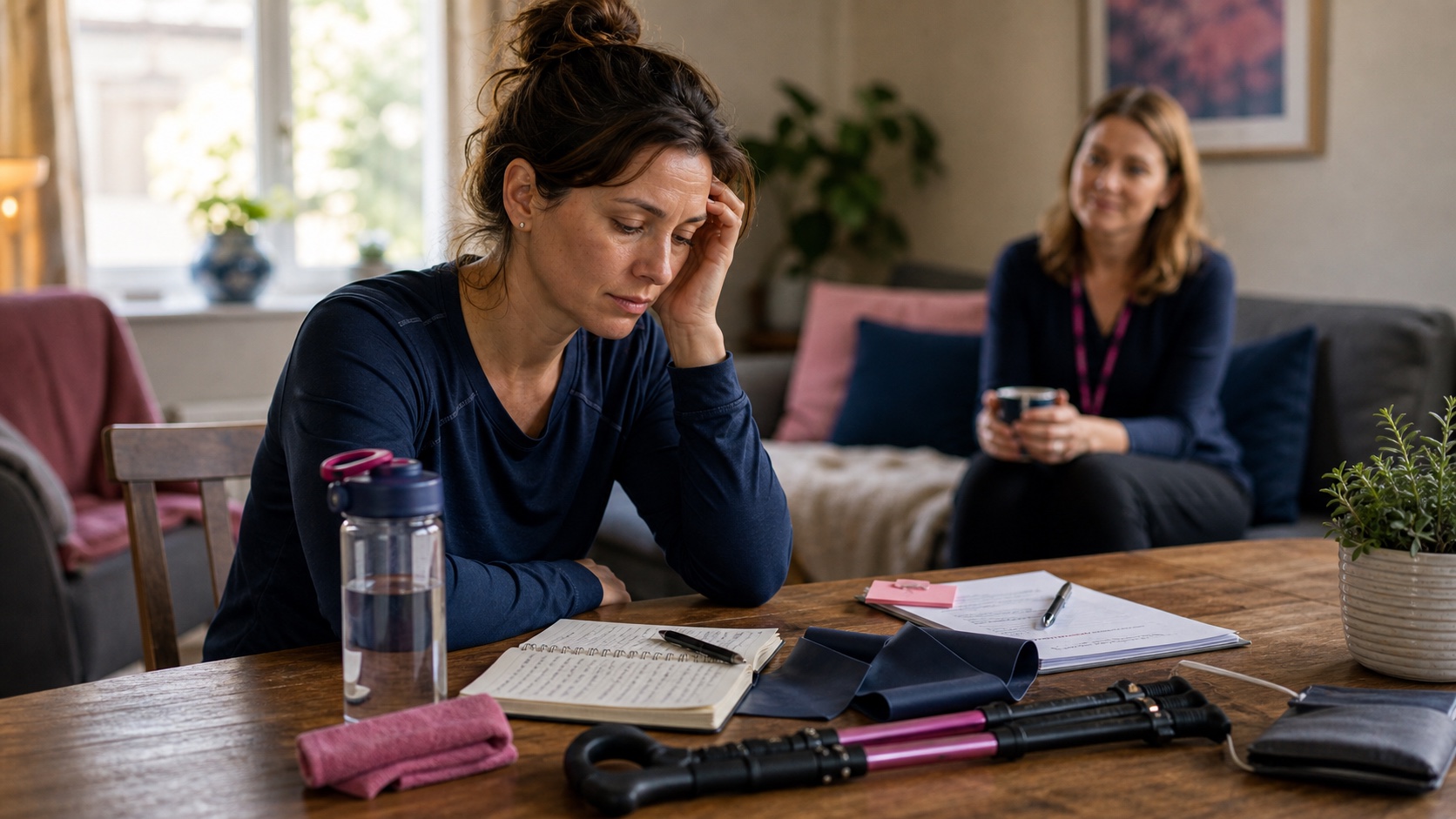
Trying with FND is rarely visible. It may mean getting dressed after poor sleep, practising movement while frightened of falling, pacing an activity instead of completing it, attending another appointment, explaining symptoms again or resting before overload becomes an episode.
Someone can be working extremely hard while appearing unchanged from the outside. Progress can also be erased by a flare, infection, stressful event, pain increase or treatment interruption. That does not make the earlier work meaningless.
Recovery Does Not Have to Mean Symptom-Free
A narrow definition of recovery can make every remaining symptom feel like failure. A broader definition makes room for meaningful change.
Recovery might mean
- having fewer or safer episodes;
- understanding warning signs earlier;
- walking more confidently or using an aid without shame;
- returning to one valued activity;
- communicating needs more clearly;
- recovering faster after a flare;
- building a meaningful life while symptoms remain.
This is not "giving up". It is refusing to delay all quality of life until a body reaches somebody else's definition of recovered.
Why Recovery Stories Can Feel Complicated
Recovery stories can be powerful. They can provide practical ideas and remind people that change is possible. They can also create grief, comparison and fear.
If one person improved through a particular treatment, that experience is real. It does not prove the same treatment will work for everybody. If another person remains disabled, that experience is also real. It does not take hope away from anyone else.
We need room for both stories without turning either person into evidence against the other.
How Clinicians and Supporters Can Offer Better Hope
- Be specific: explain what treatment is trying to improve rather than promising recovery.
- Ask what matters: the person's goal may be cooking, parenting, working, leaving home or feeling safer.
- Name uncertainty honestly: uncertainty is not hopelessness.
- Notice access barriers: a person cannot engage with specialist treatment they cannot obtain.
- Do not moralise outcomes: improvement is not proof of virtue, and persistent symptoms are not failure.
A More Useful Question Than "Have You Recovered?"
Instead of asking whether someone has recovered, ask:
"What has become easier, what is still hard, and what support would make the next step possible?"
That question makes room for progress and difficulty at the same time. It respects the person rather than grading them.
What Do You Think?
Has being told "you can recover" felt encouraging, pressuring, or both?
Have you ever been made to feel responsible for not recovering quickly enough? What would realistic hope sound like to you?
Put pacing into practice
Plan the energy cost before the activity
SeizeControl's Energy Planner turns the existing risk forecast into six-hour energy windows, then helps you see what comfortably fits while protecting some capacity for later.
Open the Energy PlannerFrequently asked questions
Can people recover from FND?
Some people improve substantially or recover, while others continue to experience symptoms or disability. Outcomes vary, and recovery may be partial, non-linear or focused on quality of life rather than becoming symptom-free.
Does not recovering mean someone is not trying hard enough?
No. FND outcomes are influenced by many factors, including symptom pattern, access to knowledgeable care, other health conditions, life circumstances and treatment availability. Persistent symptoms are not proof of poor effort.
Can positive recovery language be harmful?
It can be helpful when it offers possibility without promises. It becomes harmful when it creates certainty, dismisses disability, or implies that a person is responsible if improvement does not happen.
What can recovery mean with FND?
Recovery may mean fewer symptoms, safer movement, greater confidence, more independence, improved participation, better symptom management or a life that feels meaningful even when symptoms remain.
How should clinicians and supporters talk about FND recovery?
Use honest, individualised language: improvement is possible, outcomes vary, treatment is collaborative, and the person is not to blame for symptoms or for the pace of change.